

The sun felt scorching as I walked along a sidewalk in Jakarta, as if it were only inches above my head.
All I wanted was to rush home and crank the AC up to full blast.
I clearly remember that when I was a child, I was never this dependent on air conditioning.
In the same house, a simple fan used to do the trick.
It turns out this isn’t just my imagination running wild.
Data from Indonesia’s Meteorology, Climatology, and Geophysics Agency (BMKG) shows that the country’s average air temperature rose from 26.7 °C between 1991 and 2020 to 27.5°C in 2024.
That’s a significant 0.8°C increase in just 30 years.
And this isn’t happening only in Indonesia; global temperatures have crossed a dangerous line.
If this trend continues, how hot will the planet be for our children and grandchildren?
- The Growing Problem of Global Warming
- Why Industry Holds the Key to Emissions Reduction
- Solar Energy as a Strategic Move for Industry
- The Benefits of Solar Energy for Industry
- 1. Long-Term Cost Efficiency
- 2. Supporting Decarbonization and Global Competitiveness
- 3. Easier Emissions Compliance
- A Loving Gift for Earth’s Future Heirs
The Growing Problem of Global Warming

Rising temperatures don’t just appear overnight. They are the result of years of accumulated global warming, an issue that has become a serious threat to the world we live in.
For decades, the world has relied heavily on fossil fuels (coal, oil, and gas) to power lighting, transportation, and manufacturing and industrial sectors.
Burning these fuels is the largest source of greenhouse gases, trapping heat in the atmosphere and slowly but surely raising global temperatures year after year.
Unfortunately, Indonesia is among the major contributors to emissions, while also being one of the countries most vulnerable to climate change impacts.
Extreme weather, tidal flooding, rising sea levels, heat stress, and even the threat of food crises are becoming more likely if we don’t change how we generate energy.
Why Industry Holds the Key to Emissions Reduction

The industrial sector is one of the most significant sources of emissions in many developing countries, including Indonesia.
Making an energy transition in this sector is a crucial step toward significantly reducing national carbon output and supporting global net-zero targets.
Read More: Why Energy Transition Matters: Insights from ISEW 2023
However, moving toward renewable power is not always simple.
One of the biggest challenges businesses face is the high upfront investment in renewable energy infrastructure, especially solar panel installations.
This financial barrier often slows down adoption, even when the long-term benefits are crystal clear.
To overcome this, alternative business models have emerged in the energy sector.
Instead of requiring companies to invest heavily at the start, some energy providers now offer leasing or energy-as-a-service schemes.
Through these models, businesses can use solar power systems with little to no initial capital expenditure, paying gradually through operational savings.
In many cases, after a long-term contract period, the installed solar systems become the property of the user.
This approach allows industrial users not only to access low-carbon power but also to build long-term assets.
Solar Energy as a Strategic Move for Industry
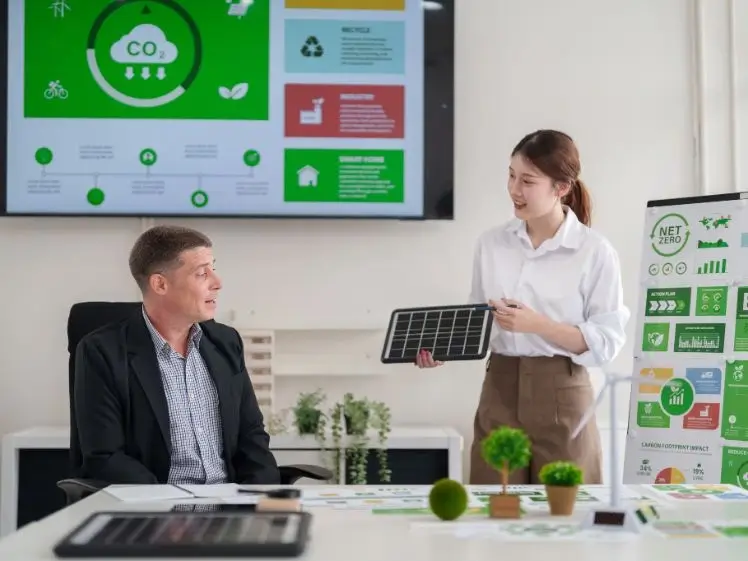
Solar power plants (PLTS) can deliver tangible savings.
For industrial facilities that operate mainly during the day, electricity expenses can be reduced by 30–40%, depending on system size and local energy prices — a range reported by multiple industry analyses and case studies.
Independent data from organizations such as IRENA also shows that solar power is now among the cheapest sources of electricity globally, reinforcing its financial appeal.
For businesses with significant operational expenses, this level of savings can significantly improve financial sustainability.
Nevertheless, the value of solar energy goes beyond cost.
It also addresses the growing demand for sustainable business practices.
By using solar power, organizations can lower their carbon and operational footprints.
This shift helps businesses prepare for increasingly stringent environmental regulations and makes them more competitive in global markets, where low-emission products are becoming the norm rather than the exception.
In this sense, solar panel technology is not just an energy solution, it is a strategic investment that makes operations more efficient, greener, and future-ready.
The Benefits of Solar Energy for Industry
1. Long-Term Cost Efficiency
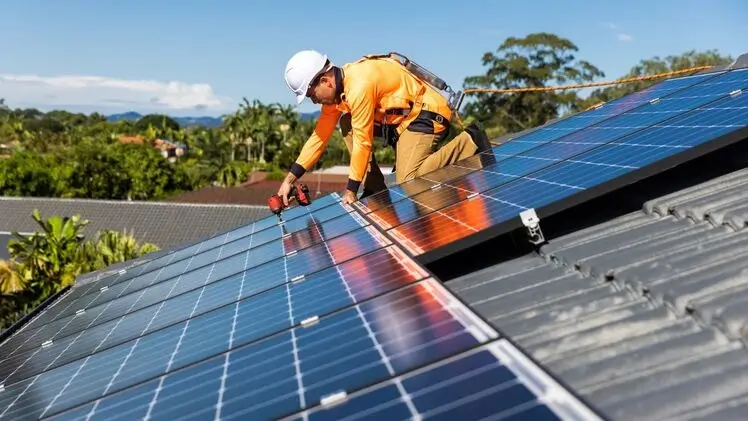
Solar-generated electricity can cut power bills by 30–40%, mainly by replacing daytime peak consumption.
With a lifespan of up to 25 years and minimal maintenance, solar energy is a long-term strategy that helps optimize operational spending while supporting decarbonization efforts.
2. Supporting Decarbonization and Global Competitiveness
The shift toward renewable sources is now a key factor in investment and international trade.
Many global investors now place greater priority on companies with strong sustainability performance.
Policies such as carbon border adjustments also push industries to reduce emissions to remain competitive.
Adopting solar solutions helps strengthen ESG performance and opens access to green financing.
3. Easier Emissions Compliance
As governments introduce more rigid reporting requirements for greenhouse gas emissions, firms need reliable ways to reduce and measure their carbon output.
Solar installations reduce emissions from conventional electricity use and provide measurable data, making compliance and reporting more manageable.
A Loving Gift for Earth’s Future Heirs

Today, we might still be able to adapt to ever-rising temperatures.
Yet, if the climate crisis continues unchecked, future generations—our children and grandchildren—won’t have the same comfort.
So we must ask ourselves: what kind of legacy do we want to leave behind?
Shifting to renewable power, including solar power for industrial use, is part of our responsibility to protect the living space of the next generation.
Every small step to reduce emissions is a real effort to safeguard their future.
If love means giving the best protection, then keeping the Earth livable is the greatest gift we can offer our descendants.
Clean energy is where that legacy begins.


